Aesthetics is not at odds with substance
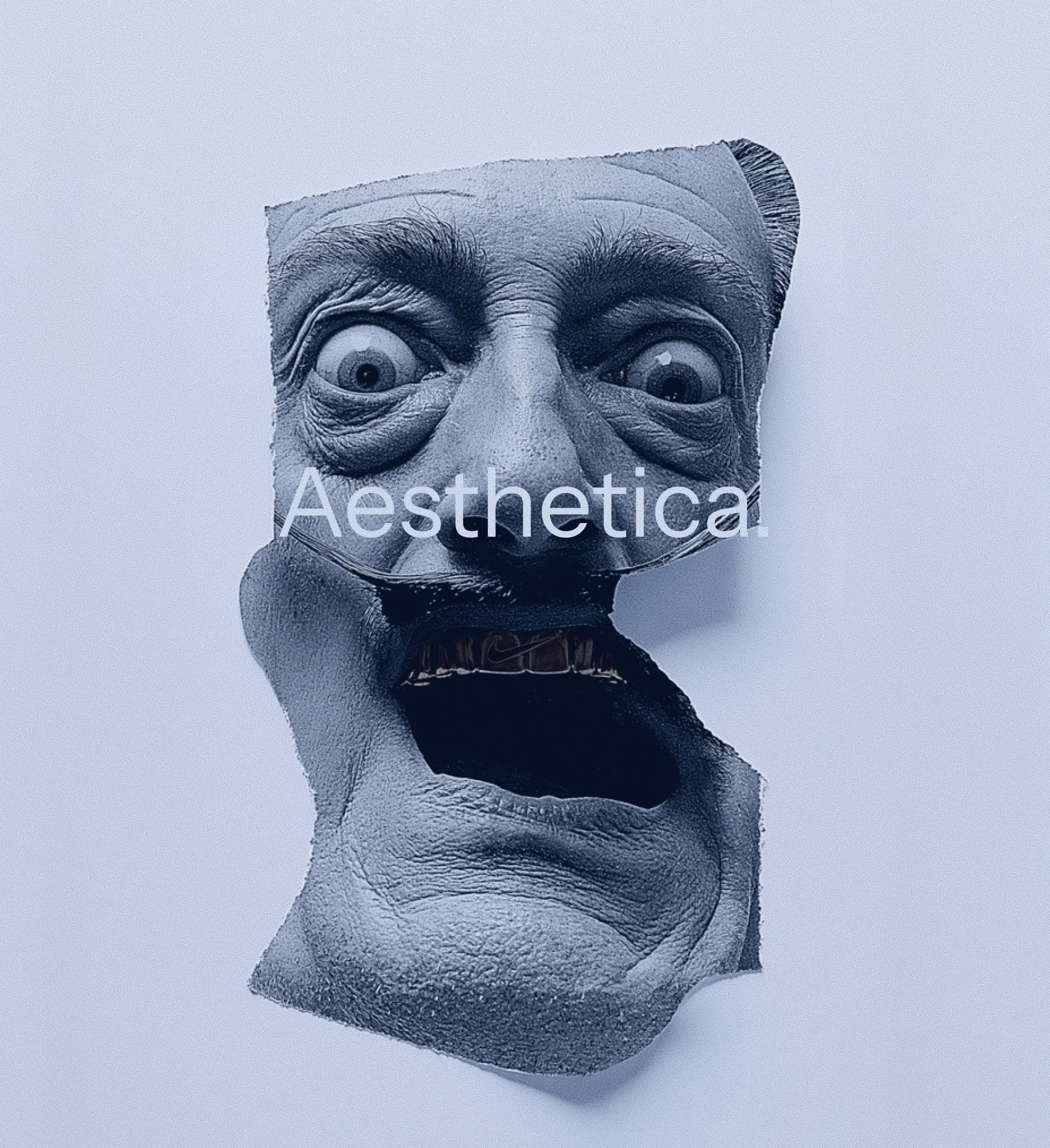
Translated from the original Spanish article.
Prompted by a recurring question I'd like to share with you, I maintain that Aesthetics is not at odds with Substance, as we tend to set them against each other in design.
As one confessedly condemned to relativism, I'm wary of substance, of objective truths, and, in short, of anything that takes itself too seriously. So I have a marked tendency to let myself be seduced by form, although, like everyone, of course, I thirst for some truth that will stir the depths of my being.
Even so, I'm going to show you that the two are not at odds, because that opposition is born of a misunderstanding about what the word means; once the misunderstanding is cleared up, the opposition collapses. Let's start with the etymology of both, substance and aesthetics.
- Substance: from the Latin substantia: sub (under) + stare (to stand). That which stands underneath, holding up.
- Aesthetics: from the Greek aísthesis (αἴσθησις): sensation, perception through the senses. From aisthánomai, “I perceive.” Not beauty. Nor ornament. It meant to perceive.
Aesthetics is a modern word, coined by Alexander Baumgarten in 1735 and developed in his “Aesthetica” of 1750. He defined it not as a theory of beauty, but as “Scientia cognitionis sensitivae”: the science of sensory knowledge. Knowledge acquired through the senses, as opposed to rational knowledge.
It makes sense, and it's illuminating: aesthetics was born as a theory of knowledge, not of ornament. The notion that “aesthetics equals appearance” is a later degradation of the concept.
So, if substantia is what holds up and aísthesis is what is perceived, they are not opposed as truth and ornament; rather, they coexist as the ground beneath and the means of access we have to that ground. Aesthetics is not contrived paraphernalia. It is the channel that lets us reach the truth.
And this idea of aesthetics, in turn, settles the question of art. Seemingly orphaned of function, but not of substance. For in the substance of art we perceive beauty, which is an end in itself.
Naturally, the unruly Nietzsche leaves us another reading: “it is only as an aesthetic phenomenon that existence and the world are justified.”
For Nietzsche, art justifies existence by means of a necessary illusion. In his view, beauty is not what gives life meaning, but what makes it bearable that life has none. Ultimately, whether beauty is a necessary illusion that lets us endure life, or something true, makes little difference: it is an end in itself for the meaning of life.
So, dear reader, in this game of few words where I merely suggest a form and you, the judge of your own criteria, will decide whether you find any substance, I'll conclude the matter in a single sentence:
Aesthetics is the vehicle that can lead us to the substance of things, or to the hidden beauty lying latent in our own gaze.