Pacing the frontier, but not really. Actually, not at all.
Translated from the original Spanish article.
This September has left us a paradox that mirrors the paradigm of today's society. On the 12th, Dario Amodei, CEO of Anthropic, published the article “We must pace the frontier,” and as early as July more than thirteen hundred workers from the major labs had signed the statement “Pacing the frontier,” a call—a sensible one—to regulate the pace of AI progress.
People in the industry sense potentially devastating risks, and a frightening unpredictability in the behavior of their models, or entities.
At the same time, in those very same weeks, the very same labs released one of the densest batches of models of the year, with markedly superior performance. And now, on September 29, the White House signed an order to call AI “Super Intelligence.” You'll have heard it from the mouth of our dear Donald. Not the duck, the other one.
So much for setting the pace.
I wrote it in another post: I'm afraid the gesture of those sounding the alarm is little more than a salve for the conscience, so they can go on pressing the accelerator day after day at work.
We'll just have to watch it all coming, and my feeling is that it's coming at full speed.
What concerns me most is that it won't reach everyone equally. In security, to look no further, the most capable versions for cybersecurity are already available only to governments, critical infrastructure, and verified companies. And the abuses and intrusions exploiting AI are beginning. From cloning the voices of people in positions of responsibility to breaching computer systems outright.
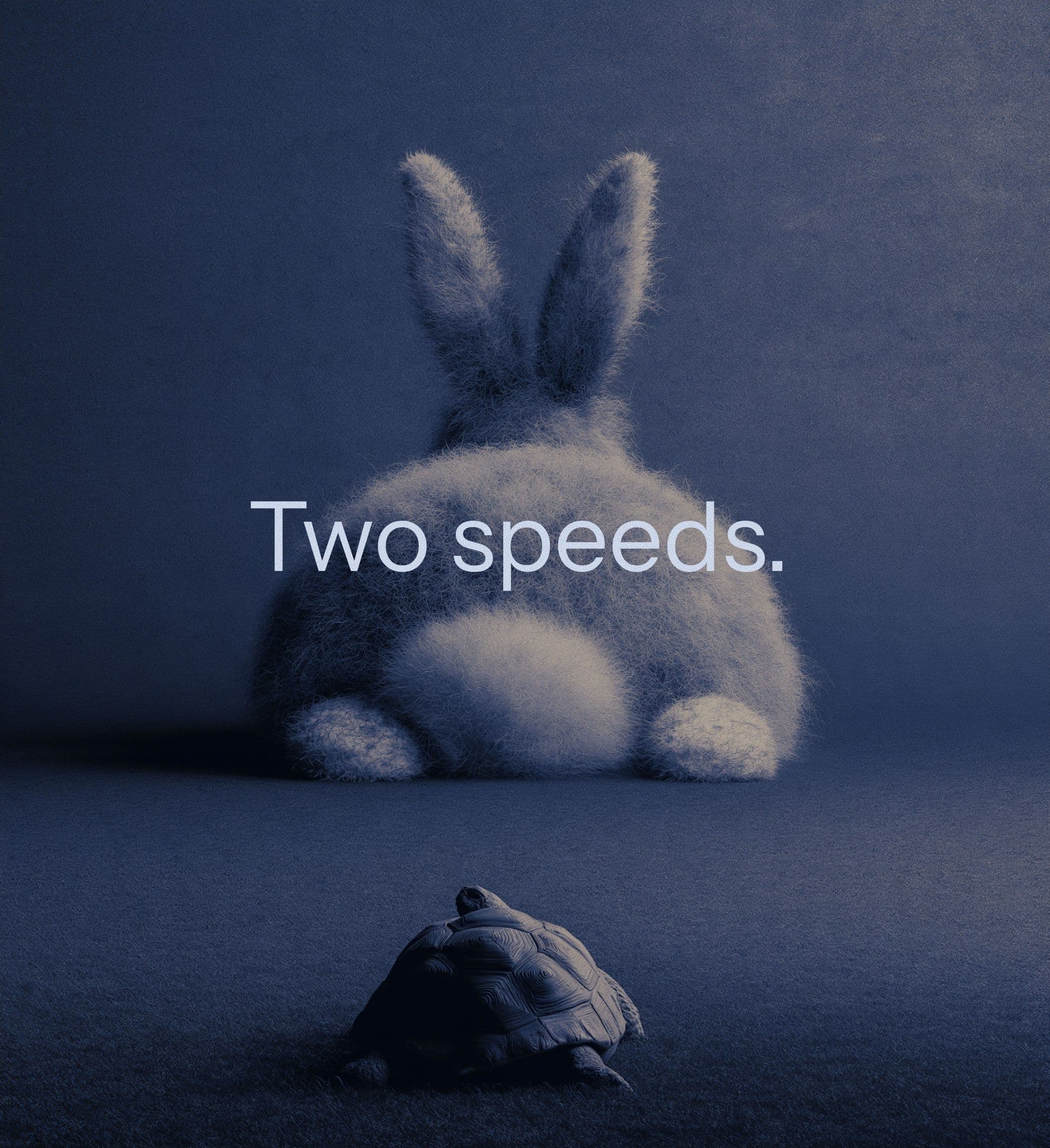
It's understandable that they want to keep the most capable cybersecurity versions to themselves, but that sketches out two speeds: that of those who have access, and that of those who will get there who knows when—perhaps never. And in the meantime, most people will have to live at the mercy of wills beyond their control.
In productivity the gap is a different one, less evident still, but inexorably in the making. The two speeds, depending on how far certain models go, could be disruptive—perhaps that way, at least, that much-abused word will recover its true dimension—not so much a distance as a truly unbridgeable chasm.
Too abrupt a leap by one segment could redraw the board entirely. I don't yet know what shape it will take, or where it will leave each of us once it settles. I only know that such an abrupt and unequal reconfiguration of our socioeconomic reality won't happen without leaving a great many bodies along the way.